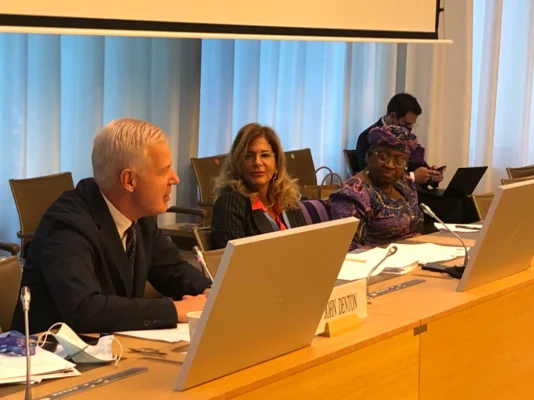
In Geneva this week for the WTO Public Forum, John Denton met with WTO Director General Ngozi Okonjo-Iweala and the B20 Italy to make known global business priorities to make trade work for people and planet -- including a call to reach a deal to end fishing subsidies and the launch on Tuesday of a set of 27 recommendations for reforming the WTO. John was also cited in this Bloomberg piece supporting Dr. Ngozi’s efforts to carry out her forward-looking agenda.
Twenty-five years after its creation, the WTO remains the most important forum for creating modern trade rules, providing transparency for government actions that promote and hinder trade, and resolving disputes between Member States.
However, the WTO is in need of reform and new rules must be written to ensure it continues to serve the needs of businesses—the ultimate end-users of the global trading system.
This paper sets out 27 concrete recommendations, under five key priority areas, that the global business community would like Member States to address at the upcoming Ministerial Conference (MC12) and build into a work program over the next few years.
Updating the WTO’s “operating system”, meaningfully dealing with the COVID-19 pandemic and broader public health issues, creating trade rules to promote environmental sustainability, updating the “rulebook” to take account of the modern digital economy, as well as making trade as inclusive as possible would not only serve business interests but also broader expectations from citizens and civil society.
Recommendations are drawn from extensive consultations from the International Chamber of Commerce’s business network across all continents and all levels of development—provide a roadmap for an ambitious, yet realistic, revitalization of the WTO that would make the multilateral trading system better work for people and for the planet.
The following 27 concrete recommendations—drawn from extensive consultations from the International Chamber of Commerce’s business network across all continents and all levels of development provide a roadmap for an ambitious, yet realistic, revitalization of the WTO that would make the multilateral trading system better work for people and for the planet.
WTO Reform
Trade and health
Trade and environmental sustainability
Trade and the digital economy
Trade and inclusivity
Get the document:
https://iccwbo.org/content/uploads/sites/3/2021/09/icc-document-wto-policy-paper.pdf